

A horizontal crack in a basement wall is one of the most serious warning signs of foundation pressure. Homeowners in Davenport, Bettendorf, Muscatine, and throughout the Quad Cities often notice these cracks forming in block or concrete basement walls after years of soil pressure building against the foundation.

Understanding what causes horizontal cracks and how they are repaired can help homeowners protect the structural integrity of their homes.
What Causes Horizontal Cracks in Basement Walls
The most common cause of horizontal cracks is pressure from saturated soil surrounding the foundation. When soil absorbs water from rain or melting snow, it expands and becomes much heavier.
This creates what engineers call lateral pressure against the basement wall. Over time, the pressure can cause the wall to flex slightly inward. When the stress becomes too great, a horizontal crack may appear along the mortar joint of a block wall or within a poured concrete foundation.
Homes in eastern Iowa often experience this problem because clay soils hold water and expand significantly during wet seasons.
Signs of Structural Pressure on Basement Walls
A horizontal crack is often one of the first visible signs that soil pressure is affecting the foundation.
Homeowners may also notice:
• basement walls beginning to bow inward
• stair-step cracks in block walls
• water entering through cracks
• separation between the wall and floor joists
• doors or windows sticking above the basement level
When these symptoms appear together, it may indicate that the wall requires structural reinforcement.
Because horizontal cracks are typically caused by outside pressure, they tend to grow over time if the underlying problem is not addressed.
Continued soil pressure can cause basement walls to bow further inward, which may weaken the structural support of the home. In severe cases, the wall can shift significantly and require major structural repair.
Addressing the problem early is often much simpler and less expensive than repairing extensive structural damage later.
How Horizontal Basement Wall Cracks Are Repaired
Repairing a horizontal crack usually involves reducing the pressure on the wall and reinforcing the structure.
Common repair methods include:
Structural reinforcement beams
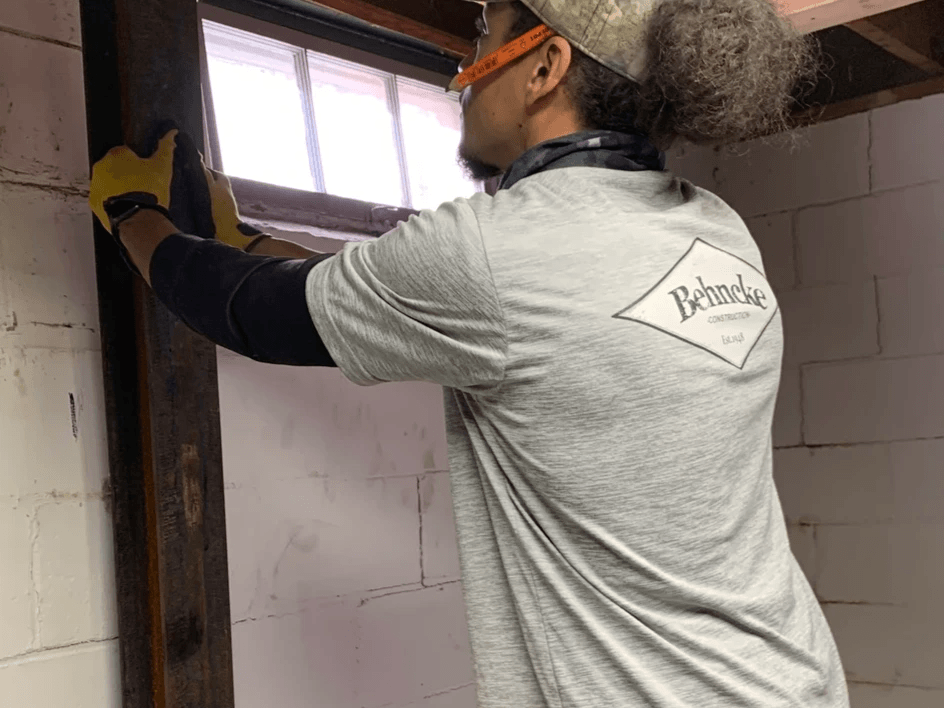
Steel I-beams or support systems can be installed vertically along the basement wall to prevent further inward movement.
Carbon fiber reinforcement
Carbon fiber straps are sometimes used to stabilize walls that have minor movement but are not severely bowed.
Drainage improvements
Reducing water buildup around the foundation can decrease the soil pressure causing the crack.
Foundation crack repair
Sealing cracks can help prevent water intrusion while structural reinforcement stabilizes the wall.
If you notice a horizontal crack forming in your basement wall, it is important to have the foundation inspected to determine the best repair approach.

Learn more about our Foundation Repair services if your basement walls are showing signs of structural pressure.
Conclusion
Horizontal cracks in basement walls are often a sign that soil pressure is pushing against the foundation. Homes throughout Davenport, Bettendorf, Muscatine, and the Quad Cities experience these conditions due to clay soil and seasonal moisture changes.
While the crack itself may seem small at first, it can indicate larger structural forces acting on the foundation. Identifying the cause early allows homeowners to repair and stabilize the wall before more serious damage occurs.
FAQ
Is a horizontal crack worse than a vertical crack
Yes. Horizontal cracks usually indicate structural pressure from outside soil and should be inspected.
Can horizontal cracks be repaired without rebuilding the wall
In many cases, reinforcement systems such as steel beams or carbon fiber straps can stabilize the wall.
What causes basement walls to bow inward
Expanding soil and hydrostatic pressure from saturated ground around the foundation are the most common causes.
When should a horizontal crack be inspected
If the crack continues to grow, leaks water, or is accompanied by bowing walls, it should be evaluated by a professional.