

Text Us 563-332-6045
- …
Text Us 563-332-6045
- …
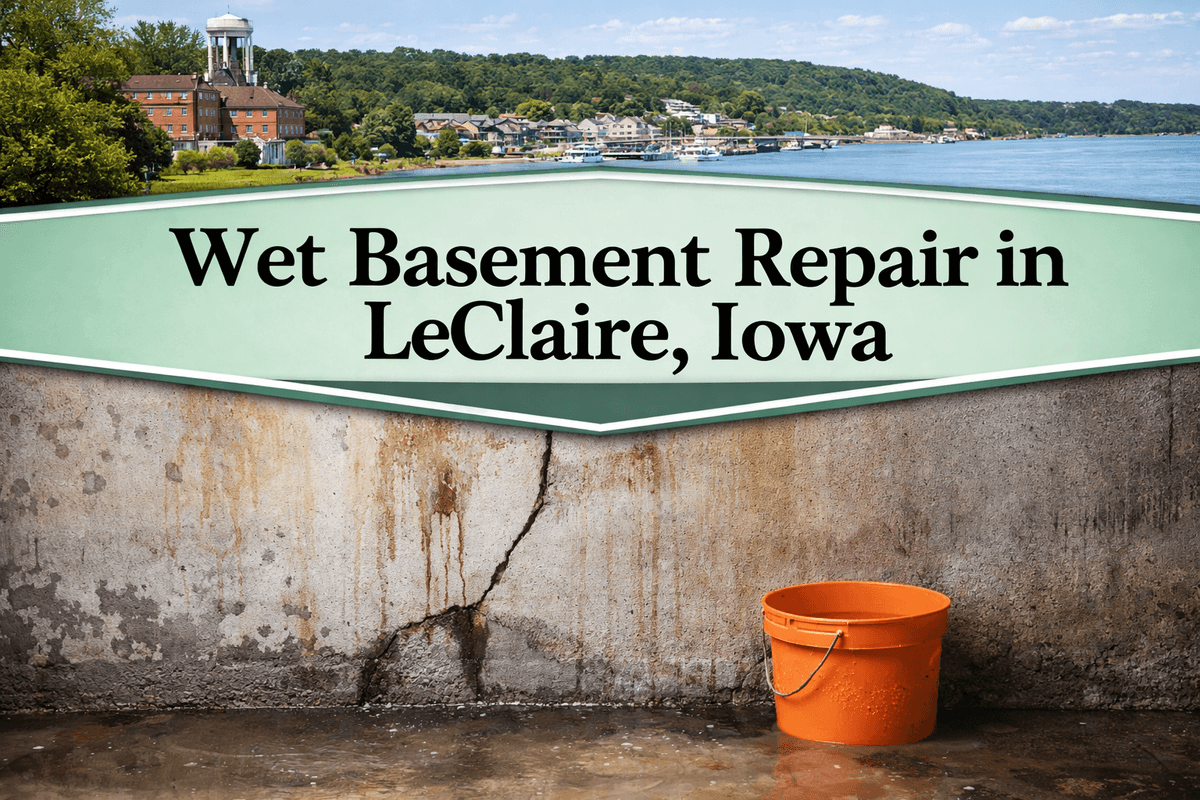
Wet Basement Repair LeClaire, Iowa
If you’re dealing with a wet basement in LeClaire, Iowa, you’re not alone. Basement water issues are extremely common in this area due to soil conditions, weather patterns, and proximity to the Mississippi River. The key is understanding that most basement water problems are not random — they are caused by predictable conditions that can be identified and corrected.
A wet basement is more than just an inconvenience. It’s a sign that water is building up around your foundation and finding a way inside. Left untreated, this can lead to structural damage, mold growth, and long-term issues that become more expensive over time.
Why Basements Get Wet in LeClaire
LeClaire presents a unique combination of conditions that make basement water problems more likely.
First, the soil in this area tends to retain moisture. When it rains, the ground around your home becomes saturated and holds water against your foundation. Unlike sandy soil that drains quickly, clay-heavy soil expands when wet and increases pressure on foundation walls.
Second, LeClaire’s proximity to the Mississippi River contributes to higher groundwater levels. During periods of heavy rain or snowmelt, the ground becomes even more saturated, increasing the amount of water pushing against your foundation.
Third, many homes in the area have aging foundations. Over time, concrete develops small cracks and becomes more porous, allowing water to seep through more easily.
When you combine these factors, it becomes clear why wet basements are so common in LeClaire.
What Causes Water to Enter a Basement
Water doesn’t just appear in a basement — it follows specific paths of least resistance.
The most common entry points include:
Cracks in foundation walls
- Block wall joints
- The seam where the floor meets the wall
- Porous concrete
- Gaps around utility penetrations
The driving force behind this is something called hydrostatic pressure. When soil becomes saturated, water builds up and pushes against your foundation. Eventually, that pressure forces water through any available opening.
This is why many homeowners notice water issues after heavy rain. It’s not just the rain itself — it’s the pressure that builds up afterward.
Signs You Have a Wet Basement Problem
Some signs are obvious, while others are more subtle.
Clear signs include:
- Standing water on the floor
- Active dripping or seepage
- Water stains on walls
- Damp or musty smells
Less obvious signs include:
- White powder (efflorescence) on walls
- Peeling paint
- Hairline cracks
- Increased humidity
Even if water isn’t pooling, moisture alone can indicate a developing problem.
Why You Shouldn’t Ignore It
A wet basement doesn’t fix itself. In most cases, it gets worse over time.
What starts as a small crack or minor seepage can turn into:
Larger structural cracks
- Bowing or shifting walls
- Mold and air quality issues
- Damage to finished basement areas
The longer water is allowed to enter, the more pressure builds and the more damage it can cause.
Addressing the issue early is almost always the most cost-effective approach.
Do You Need a Full Waterproofing System?
Not always.
Many companies push full interior waterproofing systems regardless of the actual problem. While those systems have their place, they are not always necessary.
In many LeClaire homes, the issue can be solved with:
- Correcting drainage around the home
- Extending downspouts
- Regrading soil away from the foundation
- Sealing specific cracks
The key is identifying the actual cause of the problem, not applying a one-size-fits-all solution.
The Role of Drainage
Drainage is one of the most overlooked factors in basement water problems.
If water is allowed to collect near your foundation, it will eventually find its way inside. Proper drainage moves water away before it has a chance to build pressure.
Common drainage issues include:
- Downspouts that discharge too close to the house
- Negative grading (soil sloping toward the home)
- Clogged gutters
- Lack of proper drainage systems
Correcting these issues can significantly reduce or eliminate basement water problems.
How Wet Basement Problems Are Fixed
Every home is different, so the solution depends on what’s causing the issue.
Common repair approaches include:
- Crack repair to stop direct entry points
- Exterior drainage improvements to reduce pressure
- Downspout extensions to redirect water
- Surface grading to move water away from the home
The goal is always the same: stop water from reaching and entering the foundation.
Not every home needs a large system. Many just need the right fix in the right place.
Why Local Experience Matters
Foundation and water problems are highly dependent on local conditions.
In LeClaire, factors like soil type, elevation, and proximity to the river all play a role. A solution that works in another region may not be the right solution here.
Understanding how water behaves in this specific area is critical to fixing the problem correctly.
Wet Basement Inspections in LeClaire, Iowa
A proper inspection is the first step to solving the problem.
The purpose of an inspection is to determine:
- Where the water is coming from
- Why it’s happening
- What needs to be fixed
Not every issue requires major work. Some problems are minor and can be addressed quickly, while others require a more involved solution.
The key is getting a clear, honest assessment before taking action.
Serving LeClaire and the Quad Cities
We provide wet basement repair and inspections throughout:
- LeClaire
- Davenport
- Bettendorf
- Moline
- Rock Island
- Muscatine
Our focus is on identifying real problems and providing straightforward solutions without unnecessary work.
Get Ahead of the Problem
If you’re noticing signs of a wet basement in your LeClaire home, it’s worth addressing before it gets worse.
Water issues rarely stay the same. They either improve with proper correction or continue to develop into larger problems.
Taking action early gives you more options and helps avoid more costly repairs later.
- Block wall joints
© 2017 Behncke Construction, Inc. All Rights Reserved.